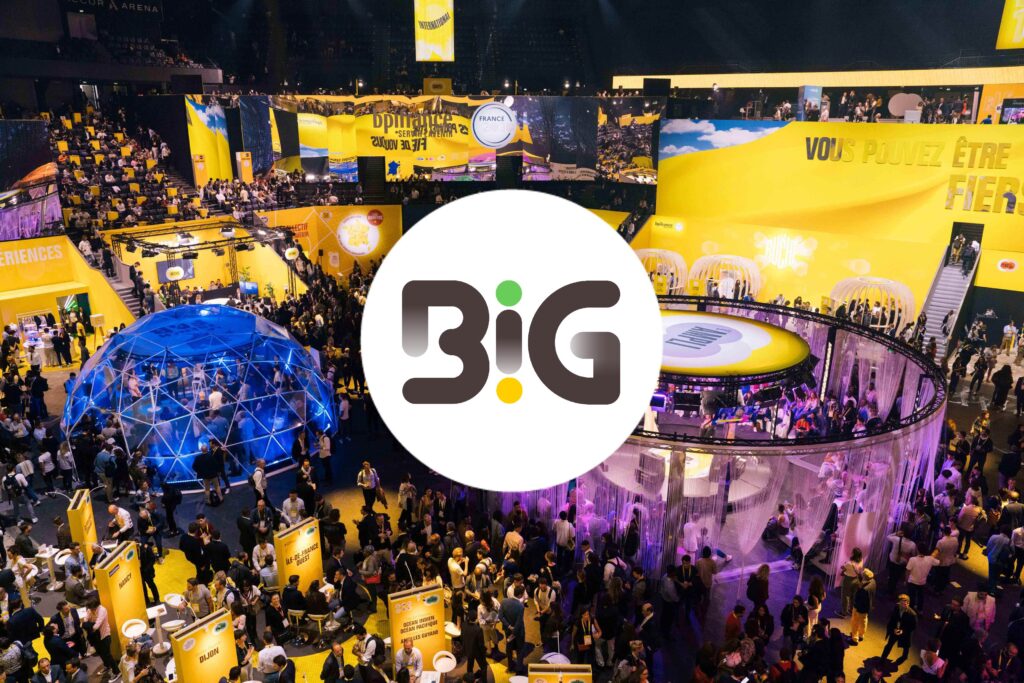
On 8 October 2026, BIG placed audacity at the heart of entrepreneurship: it is time for it to take hold in corporate communications too
Yesterday, at the Accor Arena, Bpifrance Inno Generation brought together entrepreneurs, investors and support networks under the banner of audacity. Business leaders dare to raise funds, innovate and expand internationally, but their communications often remain cautious: a press release, an announcement, then silence. In a landscape saturated with information, a bold communications and influence strategy is becoming essential to being heard.
By Inès Cotton, Media Consultant at La Nouvelle Agence
In summary, this article covers:
BIG 2026, Bpifrance’s major event for entrepreneurs, took place on 8 October 2026 at the Accor Arena in Paris, with ‘audacity’ as its theme.
Companies are bold in their strategy, but far less so in how they speak out.
Press releases alone are no longer enough: the media – and now artificial intelligence – take notice of companies that have a point of view.
We draw three lessons from this: dare to speak out, take a stand, and move beyond the standard press release.
The LNA perspective: useful boldness – the kind that is grounded in genuine expertise and acknowledges its limitations – is not provocation.
What we observed at BIG 2026
We were at the Accor Arena on 8 October 2026 for BIG, which Bpifrance describes as Europe’s largest business gathering. Conferences, workshops, masterclasses, support areas with experts from Bpifrance Création and 26 partner networks: everything encouraged business leaders to be bold.
Bold businesses, cautious communication
On the stages at BIG, entrepreneurs are keen to share their ventures: raising funds, expanding internationally, reinventing an industry. In their communications, however, most maintain a cautious tone: a press release to announce a product or a funding round, then nothing until the next update.
This disconnect comes at a cost. A company that talks only about its products leaves it to others to explain its market, the challenges it faces and its role in the debate.
A product press release is no longer enough
Newsrooms receive dozens of similar announcements every day. What catches their attention is a unique perspective, a previously unpublished fact, or a leader capable of explaining what is changing in their sector.
Artificial intelligence follows the same logic. As we explained in our opinion piece on Google’s AI Overview, 84 per cent of the sources cited by ChatGPT, Claude and Gemini are unpaid third-party sources, according to Muck Rack. A company cited by the press for its expertise is more likely to feature in their responses than a company that merely publishes its own press releases.
Boldness is not the same as provocation
Being bold does not mean causing offence. We recently analysed the Novig campaign, an example of outrage marketing where visibility is bought at the expense of women’s image. Negative publicity attracts attention for a while, but it does not build a reputation.
3 lessons
1. Dare to speak out, without waiting for an announcement
A company doesn’t need a new product or a funding round to attract media interest. Its perspective on its market, its customers or its industry is enough, provided it shares this regularly. The CEO is the primary spokesperson for this perspective.
2. Take a stand on issues affecting your sector
AI in business, demographic transition, sovereignty, employment: the major issues of the moment call for opinions. A company that takes a stand, backed by arguments and evidence, becomes a go-to source that journalists refer to. A company that remains silent leaves this ground to its competitors.
3. Move beyond the standard press release
Opinion pieces, research reports, unpublished data, customer testimonials, speaking at events: there is no shortage of formats. They leave a mark outside the company’s own channels, which the media and AI can pick up on.
The LNA perspective: useful boldness
Yes, boldness is becoming the norm in corporate communications. But not just any kind of boldness. The boldness we champion at La Nouvelle Agence is useful boldness: it is underpinned by genuine expertise, verifiable facts and a leader prepared to stand by them.
It can be recognised by four key traits:
Having something to say. A conviction about one’s market, backed by the company’s experience, is better than a slogan.
Proving rather than promising. A client case study, a quantified result or previously unpublished data make a stance credible.
Owning up to one’s limitations. A spokesperson who also talks about the risks and what they do not know wins the trust of journalists.
Consistency. A one-off statement is soon forgotten. Regular communication – in the press, on stage and with content creators – builds a reputation.
This is exactly what we’re building with our clients, from start-ups to major corporations: helping leaders move from advertising to conversation. Companies that dare to take the right risks will be the ones remembered by the media, platforms and AI.
What is BIG 2026?
BIG, which stands for Bpifrance Inno Generation, is Bpifrance’s major annual gathering dedicated to entrepreneurs. The 2026 edition took place on 8 October at the Accor Arena in Paris, with ‘guts’ as its theme.
Why talk about ‘guts’ in corporate communications?
Because the media and artificial intelligence take notice of companies that have a point of view. Communication limited to product announcements leaves it to others to tell the market’s story.
How can a company take a stand without taking unnecessary risks?
By drawing on its genuine expertise, on evidence (client case studies, data, results) and on a spokesperson capable of discussing the limitations of the subject as well.
Is ‘guts’ in communication the same as provocation?
No. Provocation seeks negative publicity, at the risk of damaging the brand’s image or that of the people it features. Useful boldness seeks to offer a fresh perspective on a subject.
What should replace the product press release?
Formats that showcase expertise: opinion pieces, research reports, unpublished data, customer testimonials, or appearances on stage or in a podcast. Press releases remain useful for announcements, but they are not enough to build a reputation.
Why do executives’ public statements matter for visibility in AI systems?
According to Muck Rack, 84 per cent of sources cited by AI systems are unpaid third-party sources, including the press. An executive quoted by the media for their expertise leaves a trail that AI systems can pick up on.
To find out more: contact LNA
Do you have a strong conviction about your market but aren’t sure how to get it across in the media? La Nouvelle Agence helps executives speak out boldly and credibly: press relations, opinion pieces, influencer engagement and public speaking engagements.